
These managers argue that even though employees know that they will rarely meet the standards, it is a constant reminder of the need for ever-increasing efficiency and effort. However, output in many companies is no longer determined by how fast labor works; rather, it is determined by the processing speed of machines. When costs fall significantly outside the standards, managers are alerted that problems may require attention. Standards are one of the important quantitative tools in the hand of management to control and measure the performance of business operations. The 1st of the New Year is approaching quickly, which means only one thing for many cost accountants and manufacturers- time to switch or “roll over” standards to the latest version.
Variance Analysis in Standard Costing
- After removing 290 yards of materials, the balance in the Direct Materials Inventory account as of January 31 is $2,130 (710 yards x the standard cost of $3 per yard).
- Similarly, another objective of standard costing is to help the management of the business in controlling the costs of the business.
- Budgetary control is more effective when used along with standard costing.
- This predictive capability is particularly valuable in industries with fluctuating costs, as it enables businesses to anticipate changes and adjust their budgets accordingly.
- This system has the benefit of giving a business hard numbers to use when creating estimates for customers.
- Both of these methods require large amounts of historical cost information to be maintained for all the items stocked in the company’s inventory.
- It results in the reduction in paper work in accounting and needs very few records.
Through fixing standards, certain waste such as material wastage, idle time, lost machine-hours, etc. is reduced. Standard costing system is economical system from the viewpoint that it does not require detailed records. It results in the reduction in paper work in accounting and needs very few records. Standard Costing is a tool for the management to gain reduction in the cost and control over it. Under this technique, differences are analyzed and responsibilities are determined.
How to calculate standard costing
- Errors and inefficiencies are never considered to be assets; therefore, the entire amount must be expensed immediately.
- The normal activity has been defined as “the number of stand- ard hours which will produce at normal efficiency sufficient good to meet the average sales demand over a term of years”.
- In most cases, the Standard Costing approach is the one that is suggested for use by manufacturers.
- Standard cost accounting was first developed in the early 20th century to manage and control costs in manufacturing businesses.
The company can then compare the standard costs against its actual results to measure its efficiency. Sometimes when comparing standard costs against actual results, there is a difference. Standard costing is a system of substituting an expected cost for actual costs in the accounting records. A cost system is a tool that helps managers understand where Accounting Periods and Methods their money is going and make informed decisions about allocating resources. If a company uses a costing system that doesn’t accurately reflect the actual cost of their products, they may set prices that are too high or too low- leading to lost sales and profits. Standard costing is a tool that can be used in financial accounting to track actual costs against a budget.

Current Standards

If a company’s process is not structured properly or if the data being used is inaccurate, then the accuracy of the resulting costs will be compromised. Accurate data, however, is necessary for standard costing to be effective. Or, a retailer might use standard costs to set prices for their products based on the average markup typically applied in their industry. Standard costs are essential in helping businesses make informed decisions that Bakery Accounting drive profitability and growth.
In a standard cost system, a companyshows the cost flows between inventory accounts and into cost ofgoods sold at consistent standard amounts during the period. Itneeds no special calculations to determine actual unit costs duringthe period. Instead, companies may print standard cost sheets inadvance showing standard quantities and standard unit costs for thematerials, labor, and overhead needed to produce a certainproduct.
Other early adopters of standard costing included General Motors and Chrysler. These companies saw the benefits of having a standard cost for each unit produced, which helped them keep their expenses in check and ensure they were making a profit. Today, standard costing is used by many different types of businesses worldwide.
Standard Costing: Key Components, Calculations, and Impact
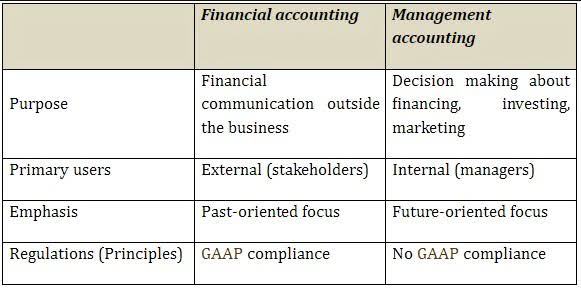
For most of these organizations, there was typically a problem to solve, and unknown “profit sinks” no one could quite explain or resolve. Inventory valuation is easier to understand with a standard cost system than an actual cost system. This is simpler and easier for business stakeholders to understand and use. As such, relying on standard costing could leave an organization at a disadvantage compared to companies better equipped to respond to changes in the marketplace. As businesses standard cost systems face an increasingly dynamic and fast-paced environment, effective decision-making has become essential for maintaining a competitive edge. One key role that is essential in this process is that of management accounting.
This account contains the cost of the direct material, direct labor, and factory overhead in the products so far. A manufacturer must disclose in its financial statements the cost of its work-in-process as well as the cost of finished goods and materials on hand. Assume your company’s standard cost for denim is $3 per yard, but you buy some denim at a bargain price of $2.50 per yard. For each yard of denim purchased, DenimWorks reports a favorable direct materials price variance of $0.50. Now let’s assume that the actual cost for the variable manufacturing overhead (electricity and manufacturing supplies) during January was $90.