

Thus, a shareholder concerned for his earnings will also be concerned for the company. To calculate enterprise value from equity value, subtract cash and cash equivalents and add debt, preferred stock, and minority interest. Cash and cash equivalents are not invested in the business and do not represent income statement the core assets of a business.
Equity: Meaning, How It Works, and How to Calculate It
Learn what owner’s equity is, how it affects you and your business, how to calculate it, as well as helpful examples. The “Treasury Stock” line item refers to shares previously issued by the company that were later repurchased in the open market or directly from shareholders. Next, the “Retained Earnings” are the accumulated net profits (i.e. the “bottom line”) that the company holds onto as opposed to paying dividends to shareholders. When companies issue shares of equity, the value recorded on the books is the par value (i.e. the face value) of the total outstanding shares (i.e. that have not been repurchased).
Total Liabilities and Equity FAQ
Total equity effectively represents how much a company would have left over in assets if the company went out of business immediately. If you own a partnership with someone, you probably agreed to split the owner’s equity with one or more of the partners in percentage terms. You might own a 70% stake in the company while your partner owns 30%, for example.
Free Course: Understanding Financial Statements

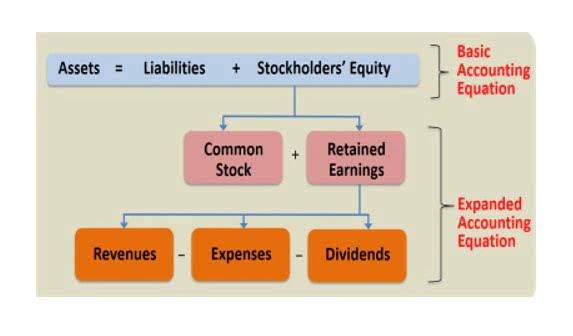
The $65.339 billion value in company equity represents the amount left for shareholders if Apple liquidated all of its assets and paid off all of its liabilities. Company equity is an essential metric when determining the return being generated versus the total amount invested by equity investors. The equity Formula states that the total value of the company’s equity is equal to the sum of the total assets minus the total liabilities. In essence, total equity is the amount invested in a company by investors in exchange for stock, plus all subsequent earnings of the business, minus all subsequent dividends paid out. Many smaller businesses are strapped for cash and so have never paid any dividends.
- It often necessitates strategic changes to improve the company’s financial position.
- As of Sept. 30, 2024 (the end of the company’s fiscal year), Apple had an accumulated deficit of $19.2 billion.
- The equity Formula states that the total value of the company’s equity is equal to the sum of the total assets minus the total liabilities.
- Equity is used as capital raised by a company, which is then used to purchase assets, invest in projects, and fund operations.
The initial equity, or the equity at the beginning of the period, is found on the company’s balance sheet. It is the residual interest in the assets of the entity after deducting liabilities, essentially representing the owners’ stake in the company. To calculate this, one would look at the equity section of the balance sheet, which typically includes common stock, preferred stock, retained earnings, and any additional paid-in capital. The sum of these components yields the total equity at the start of the period.
- Additionally, retaining earnings and reinvesting in the business can help strengthen your equity position over time.
- Equity can be a valuable resource for financing business growth initiatives.
- If your liabilities are higher than your assets, your equity will be negative, which could mean financial trouble.
- The first is the money invested in the company through common or preferred shares and other investments made after the initial payment.
- Learn financial statement modeling, DCF, M&A, LBO, Comps and Excel shortcuts.
- Treasury shares can always be reissued back to stockholders for purchase when companies need to raise more capital.
Figure out how much you’ll get if you sell your stake in a company
A company with a healthy equity base may be better positioned to weather economic storms, making it a potentially safer bet during volatile market conditions. This can be especially relevant for risk-averse investors, such as retirees or those with a conservative investment profile, who prioritize capital preservation. Moreover, companies with robust equity levels may have more resources to invest in growth opportunities, which can be an attractive quality for investors seeking capital appreciation. Financial analysts often use average total equity as a denominator in key ratios such as return on equity (ROE), which measures a law firm chart of accounts company’s profitability relative to the equity held by shareholders. A stable or increasing average total equity, when coupled with a consistent or rising net income, can signal a company’s adeptness at using its capital to generate profits. Conversely, a declining trend may prompt further investigation into the company’s operations and strategy.
- One common mistake when calculating equity is to confuse revenue with equity.
- Cash and cash equivalents are added as any cash left after paying off other shareholders are available to equity shareholders.
- If all of the company’s assets were liquidated and used to pay off debts, the shareholder’s equity is the amount that would be left over.
- Shares bought back by companies become treasury shares, and the dollar value is noted in an account called treasury stock, a contra account to the accounts of investor capital and retained earnings.
- Negative brand equity is rare and can occur because of bad publicity, such as a product recall or a disaster.
- The stockholder’s equity can be calculated by deducting the total liabilities from the company’s total assets.
- Corporations are formed when a business has multiple equity ownership, but unlike partnerships, corporation owners are provided legal liability protection.
Understanding equity lets you know how much your stake in a company is actually worth, how much skin you have in the game, and whether it’s worth continuing being an owner or part-owner total equity formula of a company. Because Anne’s mom’s stock is preferred stock, she gets first dibs on the dividend. She’s entitled to $5,000 of the dividend, leaving Anne and Alex to split the rest. Anne, Alex, and Anne’s mom each own $10,000 in shares—a third of the company each. So it makes sense that they would each get an equal slice of the pie, right?

A company with a larger portion of equity compared to liabilities typically has a lower risk of bankruptcy because of its lower debt burden. The above formula sums the retained earnings of the business and the share capital and subtracts the treasury shares. Retained earnings are the sum of the company’s cumulative earnings after paying dividends, and it appears in the shareholders’ equity section in the balance sheet.